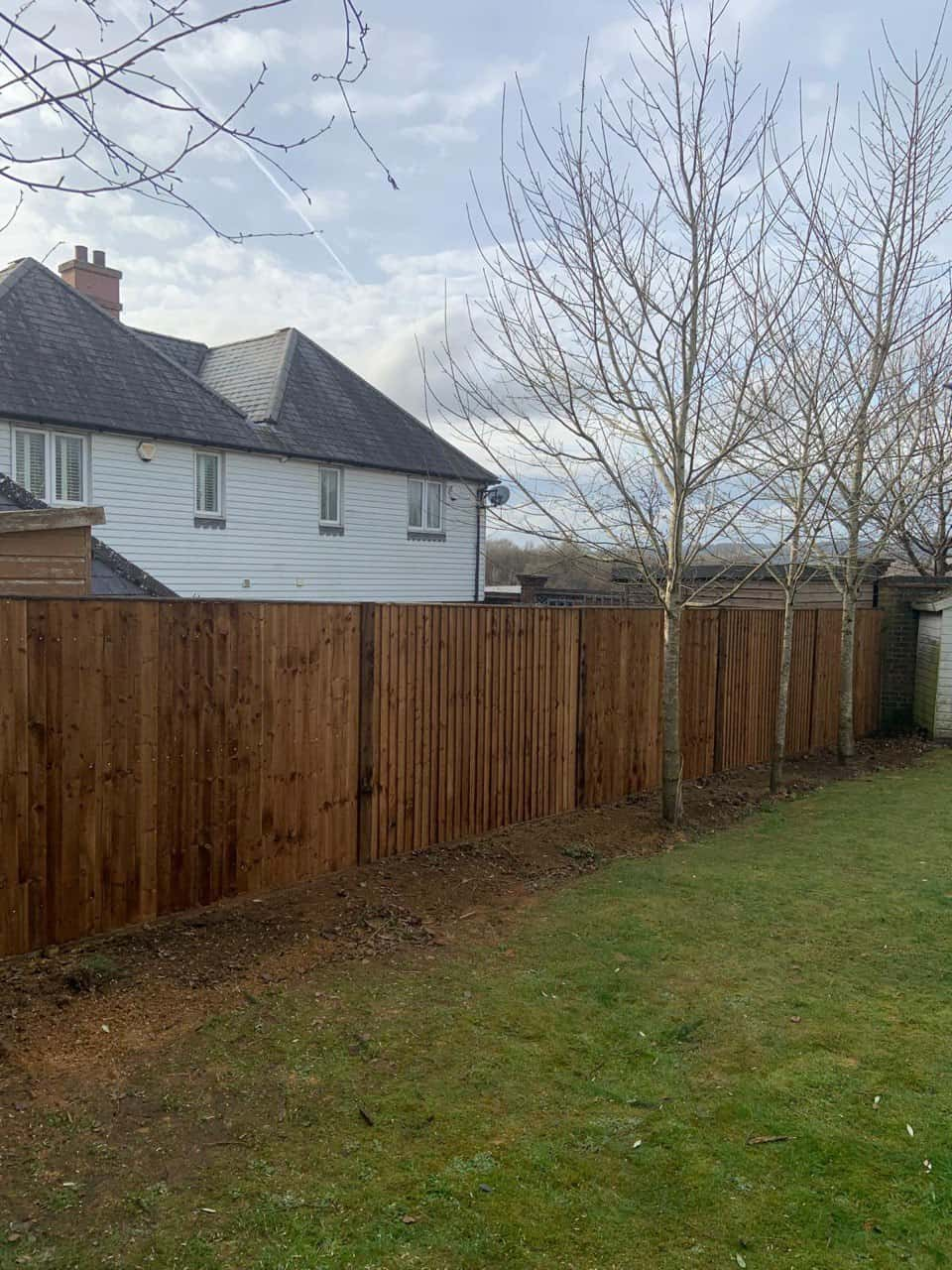
How Feather Edge Fencing Performs in Exposed and Windy Gardens in Mildenhall, Suffolk
Choosing the right fencing for an exposed garden requires more than considering appearance and privacy. Areas that regularly experience strong winds place additional pressure on fence panels, posts and fixings, making the quality of the installation particularly important. Feather edge fencing is a popular option for homeowners who want a solid, traditional boundary, but its performance in windy conditions depends on how it is constructed and installed.
For property owners in Mildenhall, Suffolk, understanding the strengths and limitations of feather edge fencing can help when planning a new garden boundary. With suitable materials, secure posts and proper installation, this style of fencing can provide a practical and attractive solution.
What Makes Feather Edge Fencing Suitable for Garden Boundaries?
Feather edge fencing is made using overlapping vertical timber boards, each with one thicker edge and one thinner edge. The boards are fixed closely together to create a continuous, solid fence.
This construction offers several advantages:
- Privacy: The overlapping boards leave fewer gaps, helping prevent clear views through the boundary.
- Strength: Individual boards are fixed to horizontal supporting rails, creating a sturdy fence structure.
- Adaptability: Feather edge fencing can be installed along different garden layouts and adjusted to follow changes in ground level.
- Traditional appearance: Its natural timber finish suits a wide range of garden styles.
However, because the boards form a relatively solid surface, wind resistance needs careful consideration in exposed locations.
How Strong Winds Affect Feather Edge Fencing
Wind places pressure on a fence by pushing against its surface. The greater the exposed area, the more force is transferred to the supporting structure.
Feather edge fencing has limited gaps between its boards, meaning it can catch more wind than fencing designs with an open construction. During strong gusts, this pressure is transferred through the horizontal rails and fixings to the fence posts and their foundations.
If any part of the structure is weak, repeated wind pressure can cause movement, loose boards or leaning sections. In severe conditions, poorly supported fencing may suffer more significant damage.
This does not mean feather edge fencing is unsuitable for windy gardens. It means that post strength, ground conditions and installation quality must be considered from the beginning.
Why Fence Post Installation Is Particularly Important
Fence posts provide the main structural support for feather edge fencing. They must withstand the combined weight of the timber and the pressure created by wind.
Posts that are inadequately secured or installed in unsuitable ground may gradually become loose, particularly where the soil is soft or frequently saturated.
A reliable installation should take account of:
- The height and overall length of the fence.
- The spacing and strength of the posts.
- The depth and stability of the post foundations.
- The type and condition of the surrounding soil.
- The expected exposure to strong winds.
Using appropriately sized posts and securing them properly helps reduce movement and supports the fence over time.
The Importance of Timber Rails and Fixings
The horizontal rails connect the posts and provide the framework to which the feather edge boards are attached. If these rails are weak, damaged or poorly secured, the fence may become less stable when exposed to repeated wind pressure.
Quality fixings are equally important. Nails or screws must be suitable for outdoor timber use and installed securely to prevent individual boards from loosening.
The overlapping arrangement of feather edge boards also needs to be consistent. Correct spacing and fixing help create a neat finish while allowing the timber to respond naturally to changes in moisture and temperature.
Can Feather Edge Fencing Be Improved for Windy Gardens?
Several installation choices can help feather edge fencing perform more reliably in exposed locations.
One consideration is the overall fence height. Taller fences present a larger surface area to the wind, increasing the pressure on the supporting posts. Choosing an appropriate height for the garden can help manage this exposure.
The layout and positioning of the fence should also be considered. Where the garden allows, the design may be adapted to reduce unnecessary exposure or incorporate more suitable boundary sections.
In particularly exposed locations, an alternative fencing style with greater gaps between boards may also be worth considering. A professional fencing contractor can explain the advantages and limitations of different options based on the garden’s layout and conditions.
Maintaining Feather Edge Fencing in Exposed Conditions
Even a well-installed fence benefits from routine checks, especially after periods of strong winds.
Homeowners should look for leaning posts, loose boards, damaged rails, rusting fixings and signs of timber decay. Problems identified early can often be addressed before they affect larger sections of the boundary.
Keeping plants and climbing vegetation under control is also helpful. Dense growth against a fence can trap moisture and, in some cases, increase the surface area exposed to wind.
Timber should be maintained with suitable exterior treatments where appropriate to help protect it from moisture and weathering.
Professional Feather Edge Fencing in Mildenhall
Installing fencing in an exposed garden requires careful attention to the ground, supporting structure and choice of materials. A fence that looks strong may still struggle in windy conditions if its posts and framework are not properly installed.
Fast Fix Fencing Mildenhall can help homeowners choose and install feather edge fencing suited to their garden requirements. By considering the boundary layout and local conditions, the team can recommend a practical fencing solution designed for stability, privacy and long-term use.
Conclusion
Feather edge fencing can provide an attractive and durable garden boundary, even in exposed locations, provided it is properly designed and installed. Strong posts, secure foundations, quality rails and suitable fixings all play an important role in helping the fence withstand repeated wind pressure.
If you are considering feather edge fencing for an exposed garden in Mildenhall, Suffolk, Fast Fix Fencing Mildenhall can help you find a suitable solution. Contact the team to discuss your fencing requirements and arrange a professional installation.
Call us on: 01638 591 199
Click here to find out more about Fast Fix Fencing Mildenhall
Click here to complete our contact form and see how we can help with your fencing needs.