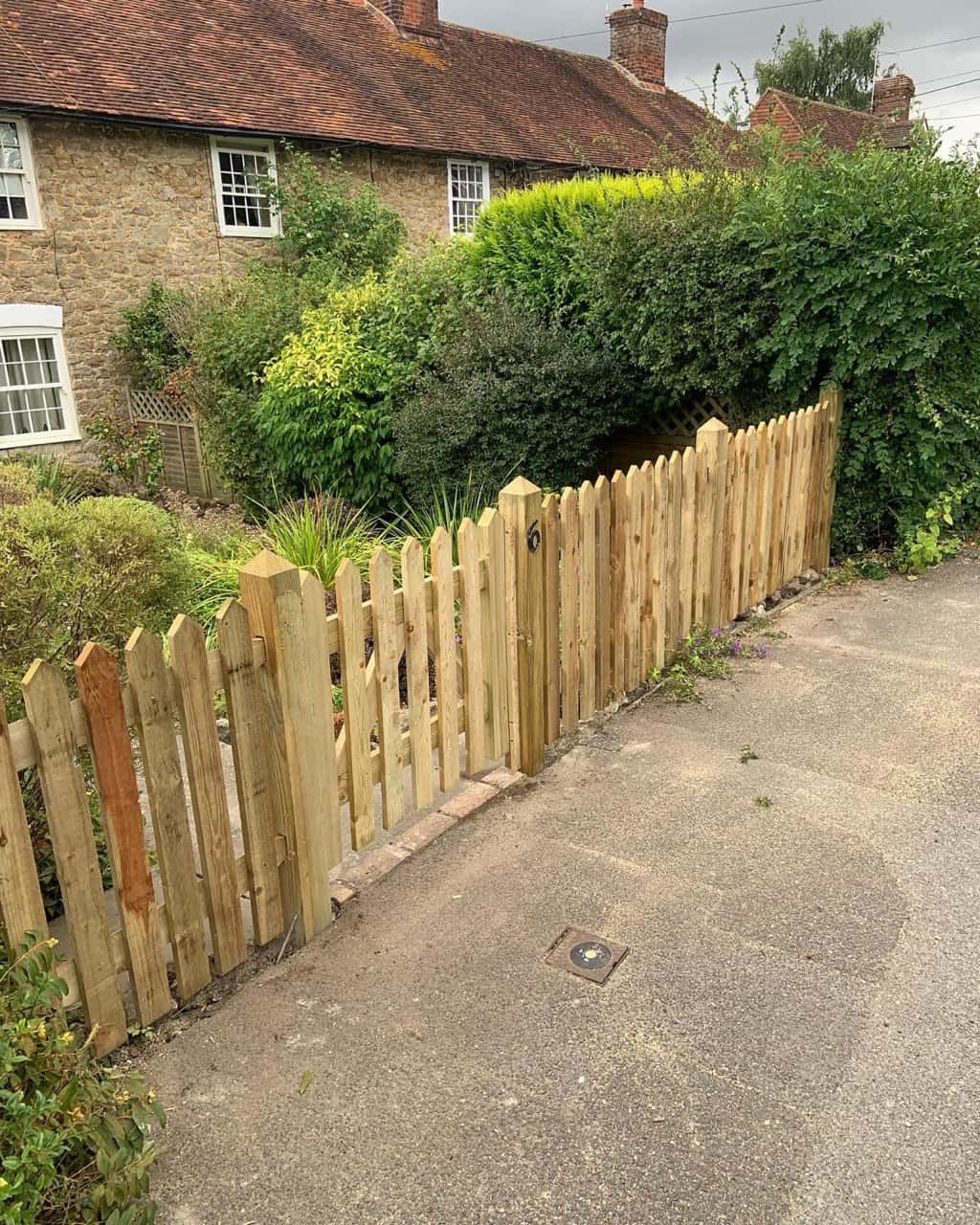
When Should Old Wood Fence Panels Be Repaired or Replaced?
Wood fence panels naturally change as they age. Exposure to rain, wind, sunlight and changing temperatures can lead to discolouration, surface cracks and slight movement. These signs do not always mean that replacement is necessary, as a structurally sound panel may still be suitable for repair.
The decision depends on the extent of the damage, the condition of the surrounding posts and whether the fence can continue providing reliable privacy and boundary definition. For property owners in Mildenhall, Suffolk, a professional assessment can help distinguish a local defect from more widespread deterioration.
Deciding Whether to Repair or Replace Wood Fence Panels
A repair is normally most effective when damage is confined to a small section and the remaining timber is firm. Replacement becomes more practical when deterioration affects a substantial part of the panel or compromises its structural integrity.
The entire fence line should be inspected before any decision is made, as an apparently damaged panel may actually be moving because of a weak post or failed fixing.
When a Localised Repair May Be Suitable
Minor defects can often be corrected without replacing the whole fence panel. A repair may be appropriate when:
- One or two boards are loose or damaged
- A small section has split
- Fixings have worked loose
- The panel has moved but remains structurally sound
- The timber is weathered but still firm
- Damage is confined to the top or edge of the panel
- The supporting posts remain stable
Replacing individual boards or renewing fixings may restore the panel’s strength and appearance. The repair should use compatible materials and address the reason the damage occurred.
Check Whether the Timber Is Still Sound
Surface weathering is different from structural decay. Grey or faded timber can still be strong, while painted or treated wood may conceal softness underneath.
The panel should be checked for areas that feel spongy, crumble under light pressure or have lost their ability to hold a fixing. Particular attention should be given to the lower edge, where moisture can remain against the timber.
If decay is limited, removing and replacing the affected section may be sufficient. When softness extends across several boards or through the panel frame, replacement is more likely to provide a dependable result.
Inspect the Fence Posts Before Blaming the Panel
Fence panels rely on stable posts. If a panel leans, rattles or repeatedly comes loose, the supporting post may be the real cause.
Common post problems include:
- Movement at ground level
- Decay near the base
- Cracks or splits through the post
- Leaning caused by poor support
- Loose brackets or fixings
- Separation from the gravel board
Installing a new panel between unstable posts will not resolve the underlying weakness. The complete fence section should therefore be assessed so that panels, posts and fixings work together correctly.
Repeated Repairs Can Indicate Wider Deterioration
Repairing one isolated defect can be worthwhile. However, frequent failures across the same panel may indicate that the timber has deteriorated beyond the point where small repairs remain effective.
Repeatedly loose boards, spreading decay and fixings that no longer hold securely all suggest that the panel has lost too much strength. Continuing to repair separate sections may leave other weak areas ready to fail.
Replacement allows the entire panel to be restored as one stable unit rather than relying on several ageing components.
Storm or Impact Damage Does Not Always Require Replacement
Strong winds, falling branches and accidental impact can damage an otherwise serviceable fence panel. If the frame remains square and most of the timber is intact, a targeted repair may be possible.
Replacement may be more appropriate when the panel is twisted, the frame has separated or several boards have broken. A distorted panel can be difficult to secure correctly and may continue placing pressure on the posts.
The neighbouring fence sections should also be checked for movement following significant damage.
Loss of Privacy Can Be a Practical Reason for Replacement
A fence may remain standing while no longer performing its intended purpose. Large gaps, warped boards and widespread splitting can reduce privacy and make the boundary look neglected.
A small gap may be corrected by securing or replacing one board. If warping affects much of the panel, repair may not restore an even appearance or reliable coverage.
Replacement can create a more consistent boundary, particularly when several adjoining panels have reached a similar condition.
Consider the Condition of the Whole Fence Line
Replacing one old panel within a generally sound fence is straightforward. The decision becomes different when many panels show similar signs of decay, movement or distortion.
A full inspection should consider:
- How many panels are affected
- Whether the damage is localised or widespread
- The condition of every supporting post
- The stability of gravel boards
- Whether the fence remains correctly aligned
- The strength of brackets and fixings
- The level of exposure to wind and moisture
This broader view helps prevent work from being planned around the most visible defect alone.
Do Not Ignore Early Signs of Damage
A loose board or small area of decay can allow water and movement to affect adjoining timber. As the panel weakens, wind can place greater strain on the fixings and supporting posts.
Useful warning signs include leaning sections, rattling panels, opening joints, soft timber and boards separating from the frame. Arranging an assessment at this stage may make a focused repair possible before deterioration spreads.
Conclusion
Old wood fence panels can often be repaired when the damage is minor, the timber remains firm and the posts are stable. Replacement is generally more appropriate when decay is widespread, the frame has distorted, fixings no longer hold or the panel repeatedly develops new problems.
Fast Fix Fencing Mildenhall provides professional fence repair and replacement services throughout Mildenhall, Suffolk. If you are unsure whether an ageing panel can be restored, contact us to arrange an assessment and receive practical guidance on the most suitable solution.
Call us on: 01638 591 199
Click here to find out more about Fast Fix Fencing Mildenhall
Click here to complete our contact form and see how we can help with your fencing needs.